
Glass Igloos in Finland: An Honest Guide to Aurora Cabins in Lapland
Thinking about a glass igloo in Finland? An honest local guide to what aurora cabins are really like, who they suit, and when a cabin serves you better.
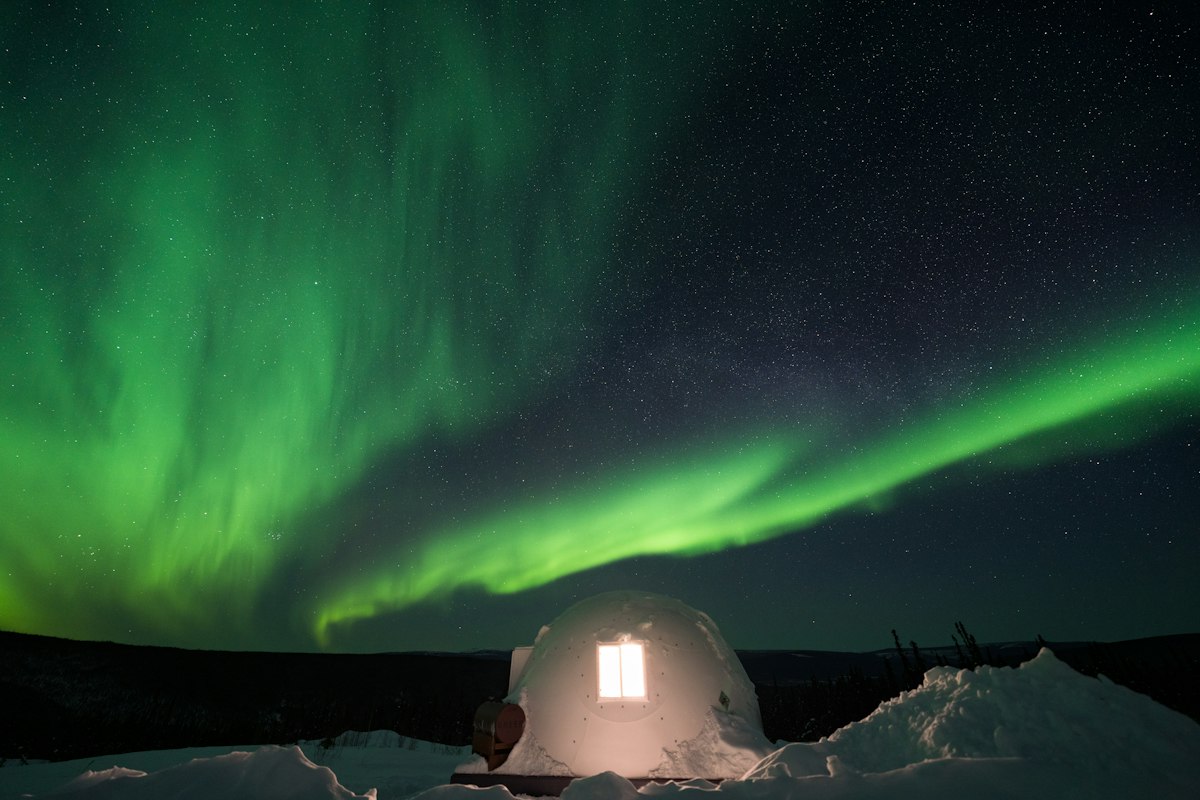
Photo: Unsplash
Every winter the same photo circulates in travel groups: a bed under a glass dome, snow all around, green light overhead. If you have searched for a glass igloo in Finland, you have seen it. The igloos are real, most of them stand here in Lapland, and on a clear night with a strong aurora they come close to the fantasy. The photo leaves out what the other nights look like. I have sent guests to glass igloos and I have talked guests out of them. This guide covers both sides: what these places offer, who they suit, and when a normal cabin gives you a better week.
What a glass igloo in Finland is
A glass igloo is a small heated cabin with a transparent roof, built so you can watch the sky from bed. Most stand in rows or clusters on resort grounds a short drive from the nearest village. Sizes range from two-person pods with a shared shower building to family units with their own bathroom, kitchenette and sauna.
Two things surprise first-time guests. The igloos stay warm through the night, and the glass is heated so frost and snow slide off instead of blocking the view. And they are small. You sleep there, you watch the sky, you keep your bags under the bed. Daytime life happens somewhere else.
Glass igloo or aurora cabin: the difference
Listings mix the names freely, which confuses almost everyone. Three types cover most of what you will find:
- Glass igloo. The classic dome. Glass over most of the roof, compact, often without its own kitchen.
- Aurora cabin. A log cabin with a glass roof section or a large glass wall above and around the bed. More space, more privacy, usually a private bathroom, often a sauna.
- Glass-roofed suite. A hotel room with a sky window, in or near a village, with normal hotel services around it.
Families tend to do better in aurora cabins. The extra floor space matters with children, and the family can spend a whole evening in the cabin rather than arriving just to sleep. Couples on a short trip choose the dome for the atmosphere and accept the tight quarters.
Will you see the northern lights through the roof?
Nobody can promise that, and I would not book a glass igloo on aurora hopes alone. Three things have to line up on your night: solar activity, darkness and a clear sky. The glass roof removes one obstacle, standing outside in the cold at one in the morning.
Clouds decide most nights in Lapland. A typical week brings a mix of clear and overcast skies, and no forecast tells you in advance which night falls on your igloo booking. If your one glass night lands under cloud, you paid a premium to watch snowflakes land on a heated roof. If timing is your main question, I wrote a full guide on when the aurora season peaks.
My advice after seven winters here: book the igloo as a beautiful way to sleep, and treat the aurora as a possible gift. If seeing the lights is the point of your trip, spread your chances across several nights in the north instead of betting everything on one glass roof.
Who a glass igloo suits
The happiest igloo guests I have seen share a few traits:
- Couples marking something. An anniversary, an engagement, a big birthday. One glass night gives the trip its centre even if the sky stays quiet.
- Sky watchers who feel the cold. You can watch for hours from a warm bed, doze off, and wake when the light changes. Standing on a frozen lake at midnight suits some people; a duvet suits others.
- Families with one night to spare. In an aurora cabin, a glass night becomes the highlight the children talk about at school, whatever the sky does.
A glass igloo suits you less if you want to cook your own meals, if your children sleep before the aurora hours, or if the price of one glass night would fund two full activity days. That trade sits at the heart of what a Lapland trip costs, and I would rather you make it with open eyes.
Which area to choose
The area shapes your igloo night more than the resort does.
- Around Rovaniemi. The easiest logistics: direct flights, short transfers, Santa Claus Village nearby. The city adds some glow to the sky, so aurora odds run a little lower than further north. A good fit for a family Christmas trip with one special night built in.
- Levi and Kittilä. A full winter resort around you: slopes, restaurants, husky and reindeer farms, its own airport. Igloo villages sit outside the centre where the sky is darker.
- Saariselkä and the far north. The darkest skies and the strongest aurora statistics in Finland. Transfers take longer and the villages are quieter, which is exactly why the sky performs. I covered the region in my Saariselkä northern lights guide.
If you are still weighing the bases against each other, my comparison of Rovaniemi, Levi and Saariselkä goes deeper.
When to go and how many nights
Aurora season in Finnish Lapland runs from late August to mid April. For the classic picture, glass dome plus deep snow, aim between December and March. September and October offer dark skies over autumn colours and thinner crowds, with no snow guarantee.
Book one glass night inside a longer stay, two if the sky matters to you. More than that rarely pays off: the rooms are small, and by the third night the magic has become a low ceiling. Glass igloos also sell out before the rest of the trip, Christmas week and the February holiday weeks first. If you are booking for Christmas, reserve the igloo the moment your dates are firm.
What it costs, honestly
Prices vary by area, season and cabin type, and they change every year, so I will not print numbers here that go stale. Expect a glass night to cost a clear multiple of a good standard cabin night in the same area. Whether that multiple is worth it depends on your trip. One useful question: would you rather have this night under glass, or a husky safari and a guided aurora chase on top of a normal cabin? Some guests answer glass without hesitating. Both answers are right.
Honest alternatives
- A log cabin with big windows and its own sauna. Book a place away from village lights, keep an aurora alert app on, and step outside when it fires. You give up the bed view and keep the space, the kitchen and a large part of the budget.
- A guided aurora tour. Guides drive to gaps in the cloud, which a fixed glass roof cannot do. On a cloudy igloo night, the tour bus wins.
- One glass night inside a cabin week. The pattern most of my guests land on: six nights of space, one night of sky.
How I plan igloo trips at Aarni
When a trip includes a glass night, I place it with care: the right area for your aurora priorities, a realistic transfer, and the rest of the stay in a cabin that fits your family. I know which igloo villages sit under dark sky and which sit next to a car park, and I will tell you in writing before you book anything. No one can order the lights for you, and I never promise them. What I can do is put you in the right place, in the right week, with a warm bed facing up.
If a night under glass belongs in your Lapland plan, start your journey and tell me who is travelling. I reply in writing, in your language, within 48 hours.
Planning a trip to Lapland?
We plan one trip at a time, by hand, around the people travelling. Tell us what you're after and we'll come back to you personally.
Start planning