The Polar Night in Lapland: How Dark It Really Gets in December
An honest local guide to the polar night in Lapland: how dark December really is, what the light looks like, how children handle it, and when to go instead.
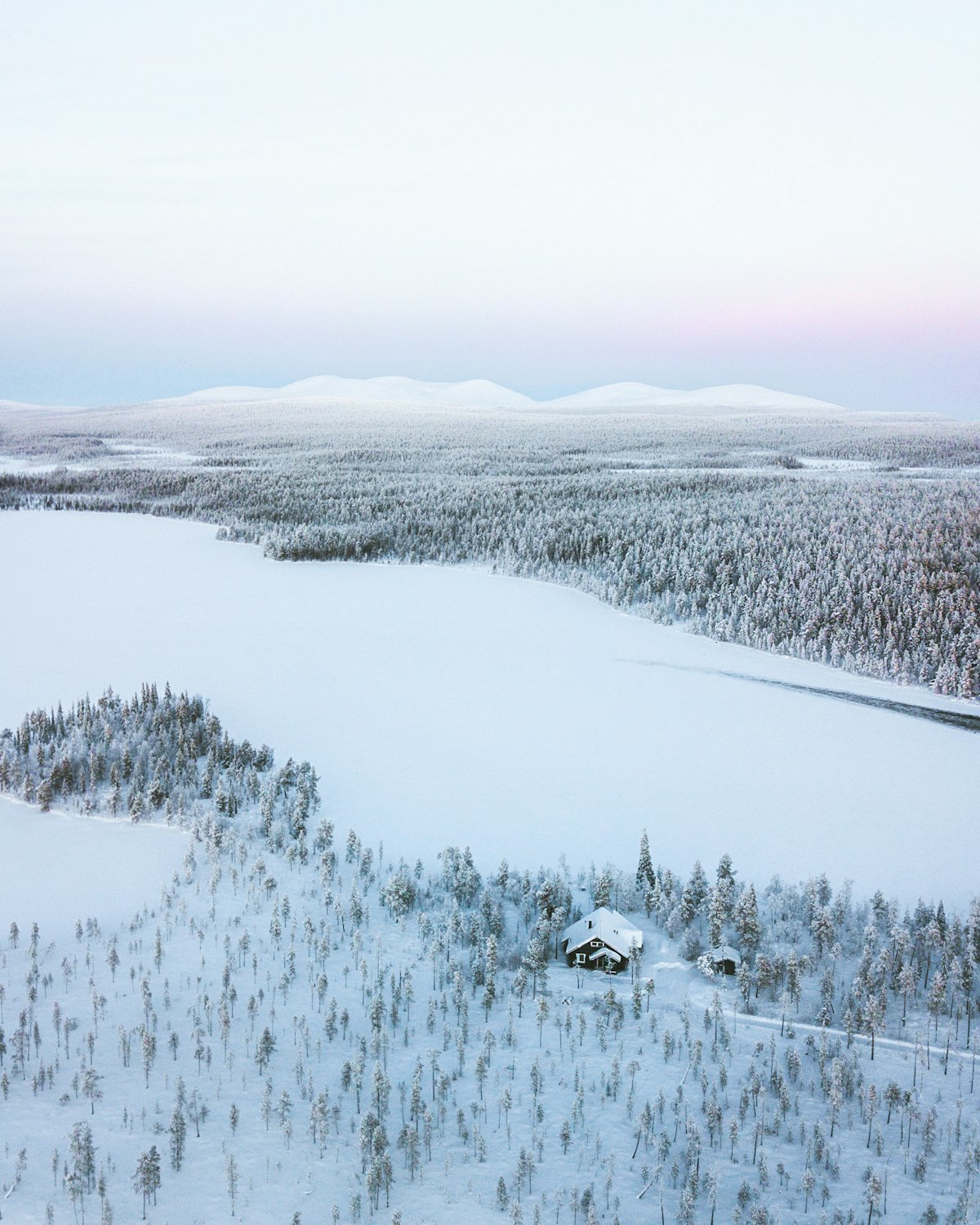
Photo: Unsplash
Every week someone asks me a version of the same question. A parent in Germany, planning a December trip, types it out carefully because they are worried the answer will ruin the whole idea: is it dark all day up there?
The polar night in Lapland is the thing families hesitate over most, ahead of cost and ahead of cold. It also gets described badly almost everywhere, usually by people selling you something. So here is the honest version from someone who lives through it every winter.
What the polar night in Lapland actually is
Kaamos is the Finnish word for the stretch of winter when the sun stays below the horizon. It is a matter of latitude. The further north you stand, the longer it lasts: a few weeks around midwinter in the far north of Finland, stretching to close to two months at the very top of the country.
Rovaniemi sits at the Arctic Circle, so the sun still clears the horizon there through December, briefly, low and sideways. Saariselkä and Inari, several hours further north, get the real thing. The answer to "how dark is Lapland in December" therefore depends on which base you have picked, and most people ask the question before they have picked one.
How dark it really gets
Here is the part that surprises people. Even where the sun never rises, the sky is not black during the day.
Sunrise and sunset in the Arctic do not happen quickly. The sun tracks along just under the horizon for hours, and that produces a long, slow twilight across the middle of the day. In practice you get a few usable hours around midday when you can walk, ski, photograph and see where you are going. Further south in Lapland you get more, further north you get less. It shifts week by week through the season and lengthens noticeably from mid-January.
The snow does the rest. A landscape under snow throws light back at you instead of swallowing it. On a clear day in late December the forest glows lilac and pale blue at eleven in the morning, turns pink and orange around one, and settles into deep blue by three. Finns call the strongest of it the blue moment. It is the reason photographers come here in December at all.
Is it hard on children?
In my experience, less than parents fear and more than nothing.
Small children mostly do not register darkness as a problem. They register snow. What they do notice is the rhythm. Without a bright morning, bodies drift, and a child who normally wakes at seven sleeps until nine and wants to be awake at ten at night. Two things fix most of that. Get outside during the light window every single day, even for twenty minutes, and keep meal times where they were at home.
The families who struggle are the ones who fill the light hours with indoor activities and then wonder why nobody sleeps. The families who do well treat midday as the appointment they never cancel.
What the darkness gives you back
Long nights are the reason you can see the aurora at all. You cannot have a bright day and a dark sky at the same latitude in the same week. December buys you the longest viewing window of the season, and it opens in the late afternoon rather than close to midnight.
It also changes how the trip feels. Restaurants, saunas, candles and fires all work harder in the dark, and evenings stretch out instead of getting squeezed. Couples in particular tend to say afterwards that the quiet is what stayed with them. If the aurora is your main reason for coming, our guide to the northern lights in Finnish Lapland covers where to position yourself and how to read the forecasts.
When the light comes back
If the polar night still worries you, book later in the season instead of talking yourself into December.
| Period | What the light is like |
|---|---|
| Early December to mid-January | Shortest days, strongest twilight colour, longest aurora window |
| Late January and February | Daylight returns quickly, nights still dark enough for the aurora |
| March | Long bright days, full snow, aurora still possible early in the night |
February is the compromise most families end up happiest with. You keep deep snow and aurora nights while getting real daylight for husky runs and snowshoeing. December wins on Christmas atmosphere and on colour. Our month-by-month guide to visiting Finnish Lapland works through the trade-offs season by season.
Planning a trip around the light
A few things that consistently work:
- Put your outdoor activity in the middle of the day rather than the morning or the late afternoon
- Book one activity a day in December instead of two, because the light will not stretch to cover both
- Choose accommodation with south-facing windows if the view matters to you
- Bring a head torch per person, and let the children have their own
None of this is complicated. It needs someone to put the days in the right order, which is most of what I do.
How we help
When we plan a December trip, the light window shapes the whole schedule. We know which activities need daylight and which are better in the dark, how far you can realistically travel between them, and which bases still get sun at Christmas if that matters to your family. If you are weighing December against February, or Rovaniemi against somewhere further north, that is the conversation to have before anything is booked.
Tell us who is coming and what you want the trip to feel like, and we will build it around the light you will actually get. Start your journey.
Planning a trip to Lapland?
We plan one trip at a time, by hand, around the people travelling. Tell us what you're after and we'll come back to you personally.
Start planning